

Skip to content

Johannesburg — Gauteng

Lapas in Johannesburg

We provide lapas across Johannesburg and the wider Gauteng area, from site survey through to handover. Thatched and sheet-roofed lapas for braais, entertaining and outdoor dining. Every enquiry starts with a site visit, a written specification and a line-item quotation — reach the South Africa team on +27 73 583 3301.

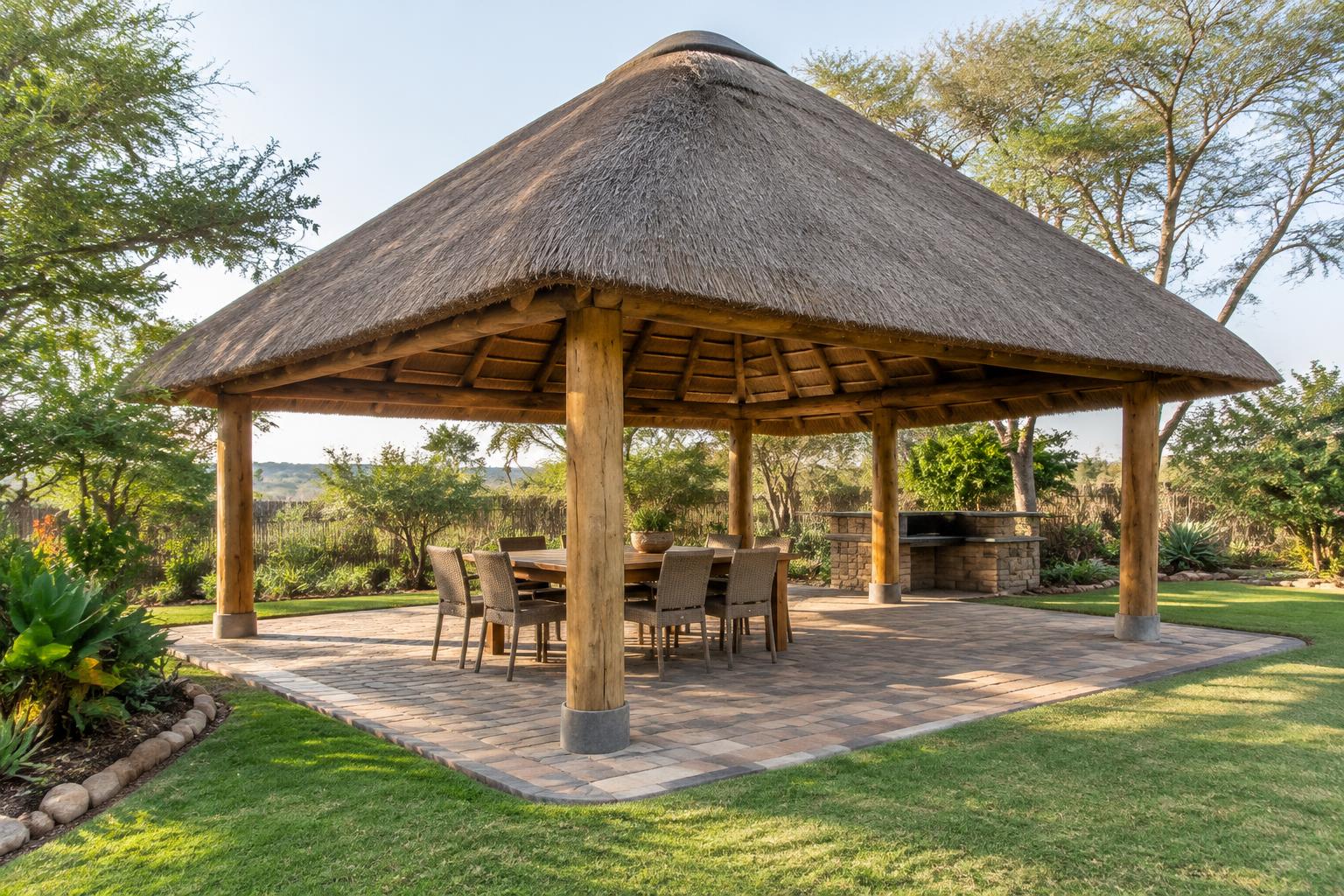
AI-generated design illustration · not a completed project

Service
Lapas
Location served
Johannesburg, Gauteng
Country
South Africa
Property types
Established freestanding homes on large treed stands, Cluster and sectional-title complexes with shared common areas, Apartment balconies, rooftops and courtyards
Nearby areas
sandton, randburg, roodepoort, midrand
Contact
+27 73 583 3301

What lapas involves in Johannesburg

A lapa is a covered entertainment area built for southern African weather — open sides for airflow, a deep roof for shade, and room for a braai and a table.

We plan the lapa around how it will be used, cast footings and a paved or screeded floor with falls away from the structure, erect gum-pole or steel framing and roof it in thatch, sheet or tile, with braai, lighting and power options.
How should a lapa be planned around cooking and seating?

Separate the cooking position from circulation and seating, and compare the shelter offered by thatch, sheet or tile roofs. A thatched lapa needs particular attention to fire clearances and care requirements. Confirm applicable rules and specialist input before selecting a braai beneath a roof.

What should a covered braai-area specification include?

Agree the frame, roof, floor and drainage before adding counters or service points. Power, water and appliance installation need explicit responsibilities and suitable qualified input where required. Lapa design should account for smoke and ventilation instead of treating the shelter as an indoor kitchen.

Local conditions we design around in Johannesburg

Johannesburg is a highveld garden city built on a ridge: intense summer thunderstorms, dry winters with frost in low-lying suburbs, and a mature urban tree canopy that puts much of the older northern suburbs into permanent part shade.

For lapas specifically, the deciding factor here is usually this: Winter frost in low-lying suburbs browns off warm-season grasses, which is often the trigger for switching high-visibility areas to artificial turf.

A second condition we plan against on Johannesburg sites: Winter is dry and sunny, so irrigation carries lawns and beds from May to September.

  • Summer storms arrive fast and heavy — stormwater falls, channel drains and paving sub-bases have to be sized for short, intense downpours rather than steady rain.
  • Mature jacarandas and plane trees create deep shade where Kikuyu thins out; LM lawn or artificial turf usually outperforms it in those positions.
  • Winter frost in low-lying suburbs browns off warm-season grasses, which is often the trigger for switching high-visibility areas to artificial turf.
  • Older suburbs frequently have clay-rich soil that holds water, so bed drainage and raised planting are worth specifying rather than assuming.

Seasonal timing for lapas in Johannesburg

Johannesburg sits at roughly 1,750 m on the Witwatersrand ridge: warm, storm-driven summers, dry sunny winters and frost pockets in the lower-lying valleys.

We schedule lapas around that rhythm rather than around our own diary, because timing changes how well the finished work settles in its first season.

  • Rain is concentrated between October and March and usually falls as short, violent thunderstorms rather than steady drizzle.
  • Winter is dry and sunny, so irrigation carries lawns and beds from May to September.
  • Frost settles in valleys and shaded southern aspects, browning Kikuyu while sheltered northern beds stay green.
  • Deep shade under mature jacarandas and planes limits grass choice across the older northern suburbs.

Who this is for in Johannesburg

Lapas suits the property types we see most often around Johannesburg and the surrounding Gauteng area.

  • Established freestanding homes on large treed stands
  • Cluster and sectional-title complexes with shared common areas
  • Apartment balconies, rooftops and courtyards
  • Offices, showrooms and retail premises
  • Braai and entertainment areas at home
  • Lodge, school and venue gathering spaces
  • Poolside shade and outdoor dining
  • Covered areas for functions and events

How the structure is set out and built — Johannesburg

Outdoor living structures are set out against the house lines and the way the space is used through the day, not dropped onto a convenient patch of lawn.

  • Set-out on site with the sun path and prevailing wind considered
  • Foundations and fixings sized for the structure and ground
  • Weather-appropriate timber, steel or masonry specification
  • Services — power, water, gas, lighting — planned before build
  • Sealing, finishing and a written maintenance schedule

Scope, preparation and materials

Preparation decides how long the finish lasts, so it is specified in writing rather than assumed on site: levels, drainage, sub-base or substrate, and edge or perimeter detailing.

  • Thatched gum-pole lapas
  • Steel-framed lapas with sheet or tile roofs
  • Built-in braais, counters and seating
  • Paved, screeded or epoxy-finished lapa floors
  • Lighting, power and water points

Why Johannesburg clients choose this specification

  • Large shaded area usable all year
  • Natural airflow keeps it cool in the heat
  • Brings braai, dining and seating under one roof

Areas we cover for lapas around Johannesburg

We install throughout Johannesburg, including Rosebank, Parkhurst, Melville, Houghton, Bryanston, Morningside, and travel to nearby sandton, randburg, roodepoort, midrand.

We work from a service area rather than a walk-in branch, so the first meeting happens at your property.

  • Rosebank
  • Parkhurst
  • Melville
  • Houghton
  • Bryanston
  • Morningside
  • Northcliff
  • Linden
  • Greenside
  • Bedfordview

Timelines and what affects cost

Programme and price both depend on the site rather than a rate card: access for materials and machinery, the amount of levelling or demolition needed, drainage work, the area covered, and the material specification you choose.

We quote line by line after measuring the site in Johannesburg, so you can compare our scope against any other quotation honestly. We do not publish per-square-metre prices, because a quoted rate without a specification tells you nothing.

Aftercare and maintenance

You receive a written care schedule at handover covering cleaning, seasonal checks and anything that needs attention in the first months. Optional maintenance visits are available where a property needs a consistent standard year-round.

How we work — from site visit to handover
  1. 01

    Consultation & site visit

    We walk the site with you, take measurements, note levels, drainage, sun and access, and understand how you want to use the space.

  2. 02

    Design & specification

    We produce a layout, material palette and written specification so you can see exactly what is being built before anything is ordered.

  3. 03

    Transparent quotation

    A line-item quotation priced against the specification — materials, preparation, labour and timelines, with no hidden allowances.

  4. 04

    Site preparation

    Clearing, levelling, excavation, sub-base, drainage and edge restraints. Preparation is where a landscape or floor is won or lost.

  5. 05

    Installation & build

    Our own crews install to the agreed specification with staged quality checks and daily site tidy-ups.

  6. 06

    Handover & aftercare

    Final walk-through, snag list, and a written care schedule so the finish performs for years, plus optional maintenance visits.

FAQs

Questions we are asked most

Free consultation & site visit

Ready to start your project?

Let’s transform your space.

Send us the property details and we will come out, measure up and put a written specification and line-item quote in your hands.

Quote